SDG 8: Decent Work and Economic Growth
Promote sustained, inclusive and sustainable economic growth, full and productive employment and decent work for all
WIUT places a lot of emphasis on the recruitment, support and development of its academic and professional staff. In 2025, the university’s main focus areas were digitalising its HR processes and making them more transparent. Recruitment ran through Huntflow, the online applicant tracking system, under the new edition of the Recruitment and Selection Policy. The APDR appraisal cycle moved fully online on apdr.wiut.uz, a platform the People and Culture and IT departments built together. In 2025, 78% of academic staff and 73% of professional and technical support staff were awarded merit-based salary increases. Other benefits WIUT offered its staff in 2025 include the Staff Support Scheme, professional development funding, medical insurance, an academic-year bonus, interest-free loans, a transport and meal allowance, and financial support for illness, surgery, and weddings.
WIUT also helped its employees look after their well-being and cope with stress by offering flexible working hours, free art, vocal and drama clubs and yoga lessons, as well as a year-round programme of staff engagement events, including Winter Sports Week, the Navruz celebration, teambuilding, WIUT Family Day and the New Year event for staff children. As WIUT continues to grow by increasing the number of its students and courses, new positions are also being created. In 2025, 51 employees were recruited and onboarded; 13 of them were international. In 2025, the university provided paid internships to 5 WIUT students.
When it comes to graduate outcomes, the class of 2025 totalled 1,289 students who graduated in the 2024–2025 academic year: 1,015 at the undergraduate level and 274 at the postgraduate level. Among undergraduate programmes, Finance and Economics with Finance graduates are strongly concentrated in banking and financial services, while Commercial Law graduates are predominantly employed in the legal sector (33%). Business Information Systems graduates are led by IT & Telecommunications (44%), and Business Management graduates work across the widest range of sectors, with Logistics & Transportation as the leading destination.
Among postgraduate programmes, MA in Learning and Teaching (MALT) and the PG Certificate in Teaching and Learning record the highest satisfaction and recommendation rates (95–100%). MSc in Applied Economics graduates demonstrate the strongest indicators of professional progression, with 31% receiving a promotion or salary increase following graduation.
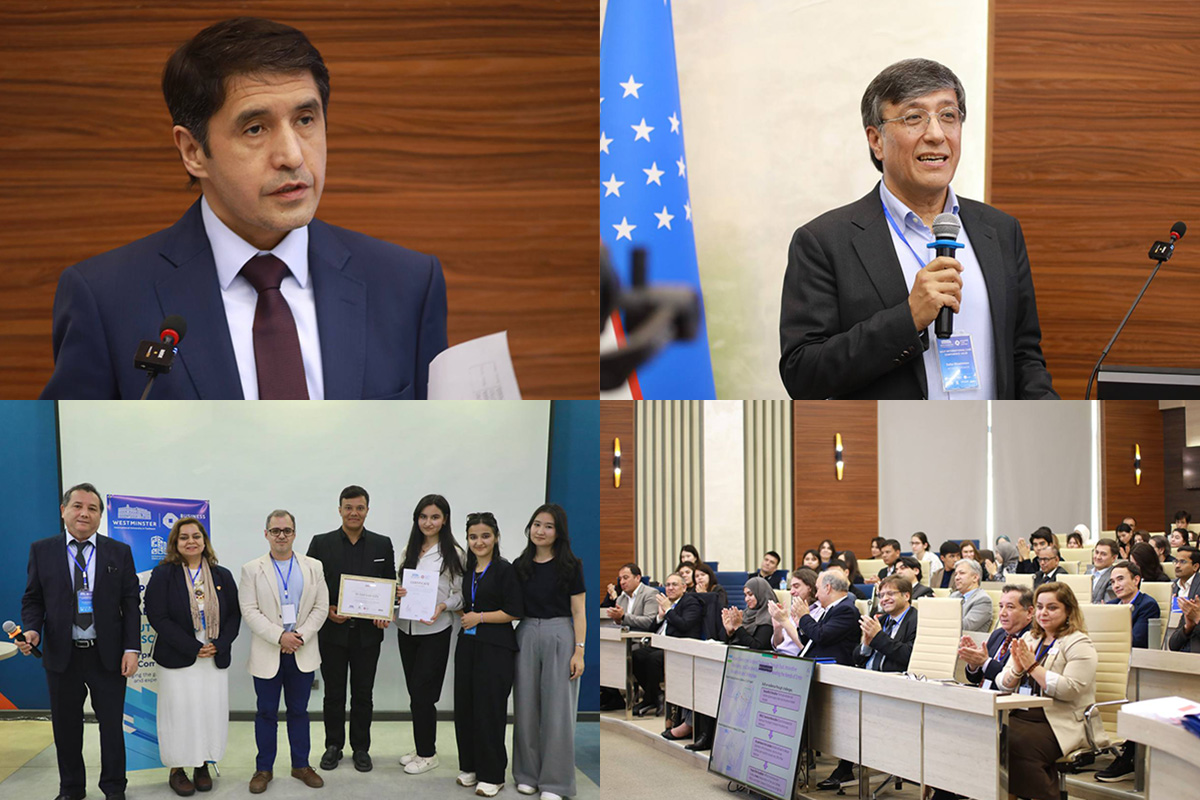
WIUT International Case Conference (ICC) 2025
The inaugural WIUT International Case Conference (ICC) 2025, organised by the Business Case Centre (BCC) at Westminster International University in Tashkent (WIUT), was successfully held on May 15, 2025. The conference centred on the theme "Inclusive Solutions for Sustainable Business," exploring innovative, inclusive approaches to contemporary business challenges, with a particular emphasis on sustainability and regional relevance.
ICC 2025 used the case method to advance experiential learning, helping educators craft impactful cases on Central Asian business and inclusive, sustainable decision-making.
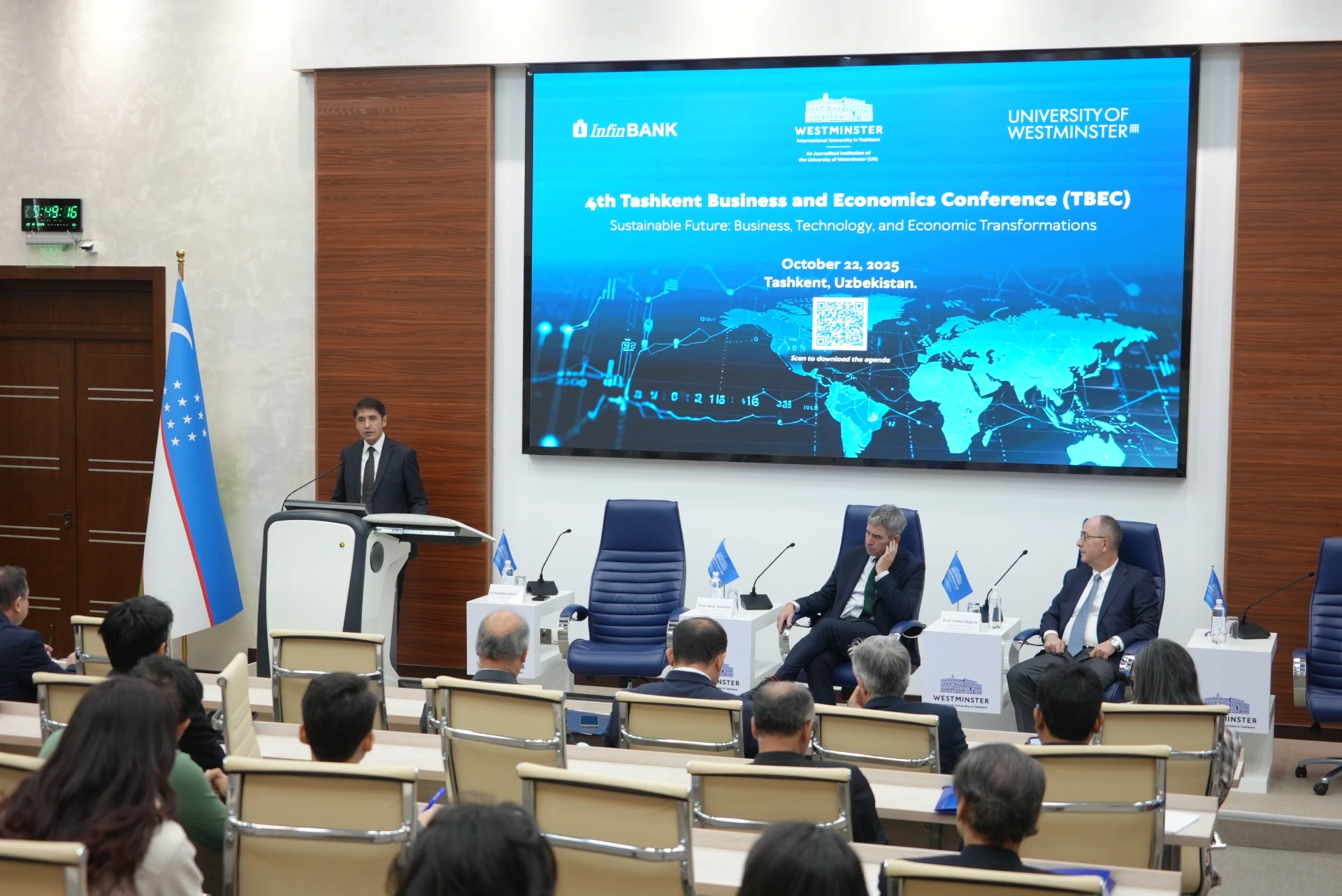
4th Tashkent Business and Economics Conference (TBEC)
Westminster International University in Tashkent (WIUT) proudly hosted the 4th Tashkent Business and Economics Conference (TBEC) on October 22, 2025, bringing together global thought leaders, researchers, and industry experts to explore the transformative intersection of technology, sustainability, and economic strategy.
Held in a hybrid format, both in-person and online, the conference welcomed a diverse array of participants from academia, finance, government, and the private sector. Under the theme “Sustainable Future: Business, Technology, and Economic Transformations,” TBEC 2025 addressed the pressing challenges and opportunities posed by digital disruption, globalisation, and shifting trade policies.
The conference featured multidisciplinary research across economics, finance, management, and marketing, with sessions focused on:
Disruptive Technologies: AI, blockchain, automation, and FinTech reshaping global trade and business models.
Trade and Tariffs: The impact of evolving trade policies and economic dependencies on market stability.
Sustainable Growth: ESG, green finance, and inclusive development strategies.
Organisational Transformation: Leadership, innovation, and the future of work in a digital economy.
TBEC 2025 served as a dynamic platform for cross-border collaboration, knowledge exchange, and policy innovation. Participants engaged in vibrant discussions on how emerging technologies and strategic leadership can drive sustainable transformation in business and economics.
Publications
Rehman, M.A.U., et al (2024). Expose the Hidden: Investor Sentiment and Anomaly Strategies in Emerging Market. Romanian Journal of Economic Forecasting. https://ipe.ro/new/rjef/rjef4_2024/rjef4_2024p63-81.html
Alimukhamedova, N. and Yusupov, N., (2025). Closure of the Non-Bank Microfinance Sector in Uzbekistan: Who Is Affected and by How Much? Economics of Transition and Institutional Change. https://doi.org/10.1111/ecot.12452
Employment Practice
To read the full report on the SDGs for 2025, please follow this link.